
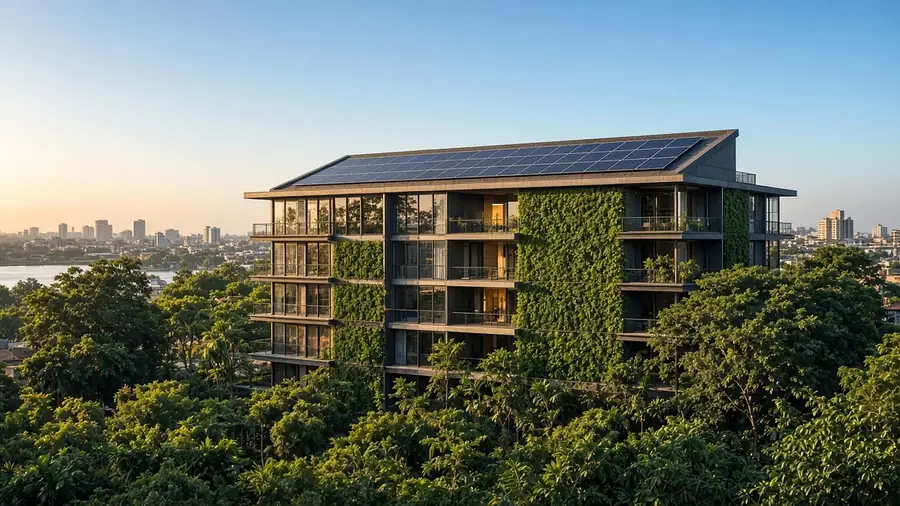
Buildings shape our energy bills, our health and our climate. Here is why building sustainably is one of the most practical things a growing African city can do.
The building you sit in is part of the climate story
We usually think of climate change as something that happens in the sky, in factories or on the road. But the buildings we live and work in play a large part. Globally, buildings and construction account for roughly a third of energy use and a similar share of energy-related carbon emissions. The same buildings also decide whether your home is a comfortable place at 3 p.m. in March.
In hot, humid cities, that comfort has a price. When a building traps heat, families turn to air conditioners and generators. Fuel and electricity bills rise, the grid is strained, and the noise and fumes spread through the neighbourhood.
What a sustainable building actually is
A sustainable building is not a luxury or a gadget. It is a building designed so that it:
- stays cooler with less energy, through shade, airflow and a well-designed roof
- uses water wisely, for example by collecting rainwater
- uses materials that last and, where possible, are made close to the site
- produces some of its own power, often with solar panels
- stays healthy to live in, with fresh air and daylight
Most of these decisions are made at the design stage, long before the first block is laid. That is why planning matters more than expensive equipment.
“Isn’t green building too expensive?”
This is the question we hear most. The honest answer is: it depends on when you plan for it. Features added at the design stage often cost little. The same features added later, as repairs and retrofits, usually cost much more. And a building that uses less electricity, water and fuel keeps saving money every month it stands.
The right way to judge cost is not the price on the day you build, but the total cost over ten or twenty years. We will look at that in a later post.
Why this matters now
African cities are growing quickly, and many of the buildings that will stand in 2050 have not been built yet. That is an opportunity. Each new building can be a burden on the grid and the climate for fifty years, or a building that quietly pays for itself and protects the people inside.
What you can do this week
- Look at the sun path on your property: which walls get the harshest afternoon sun?
- Check your roof: is it dark, uninsulated or without ventilation?
- Ask your architect or builder what passive cooling options exist for your plan.
If you are planning a project and want practical, cost-conscious advice on building sustainably, get in touch with us at contact@autobillconst.com. Follow our short videos on YouTube and Facebook for a new tip every week.