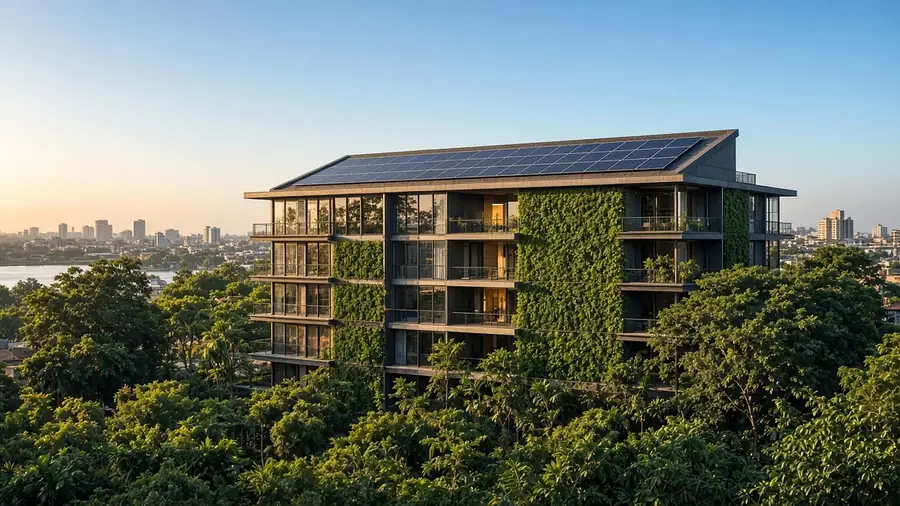

Before you buy a bigger air conditioner, look at the building itself. Five design choices can keep a home noticeably cooler and cut your electricity bill.
Start with the building, not the machine
An air conditioner is a cure. Good design is prevention. If a building gains less heat in the first place, you need less cooling, a smaller unit or none at all. Architects call this passive cooling, and it works especially well in hot, humid climates when it is planned early.
Here are five choices that make the biggest difference.
1. Protect the roof
In tropical climates the roof takes the sun for most of the day, so it is usually the biggest source of unwanted heat. A light-coloured or reflective roof sheet, insulation under the roof covering, and a ventilated ceiling space all reduce the heat that reaches the rooms below. If you can only fix one thing, fix this.
2. Shade the walls and windows
Sunlight that has already entered a room is hard to remove. Stop it outside instead. Deep roof overhangs, verandas, louvres, screens and well-placed trees all keep direct sun off walls and glass. Pay special attention to windows facing east and west, where the low morning and afternoon sun is strongest.
3. Let the air move
Moving air makes a room feel cooler even when the temperature does not change. Place openings on opposite sides of a room so wind can pass straight through (cross ventilation). Use high ceilings and openings near the roof so hot air can rise and escape. A ceiling fan then does the rest, and uses far less electricity than an air conditioner.
4. Choose materials with care
The right material depends on the climate and the use of the building. In hot, humid places, lightweight, well-ventilated construction usually suits living spaces better than a heavy, sealed one that holds heat into the evening. Ask your designer to explain the choice for your plot rather than copying a design from another climate.
5. Use the landscape
Trees and shrubs on the sunny side of a building give shade and cool the air around it as they release moisture. Paved yards, by contrast, soak up heat and radiate it back at night. Grass, planting beds and permeable paving help twice, because they also reduce flooding.
Will this work for an existing building?
Often, yes. Reflective roof paint, shading the west wall, adding louvres or screens, and opening up ventilation are all realistic upgrades. They cost far less than another air conditioner, and the savings continue.
Quick checklist
- Is the roof light-coloured and ventilated?
- Do the east and west windows have shade?
- Can air pass through each room from side to side?
- Is there a tree or screen on the sunny side?
Need help judging which upgrades are worth the money for your building? Email us at contact@autobillconst.com and we will explain the options and costs in plain language.